
Design and Technology
Curriculum Intent
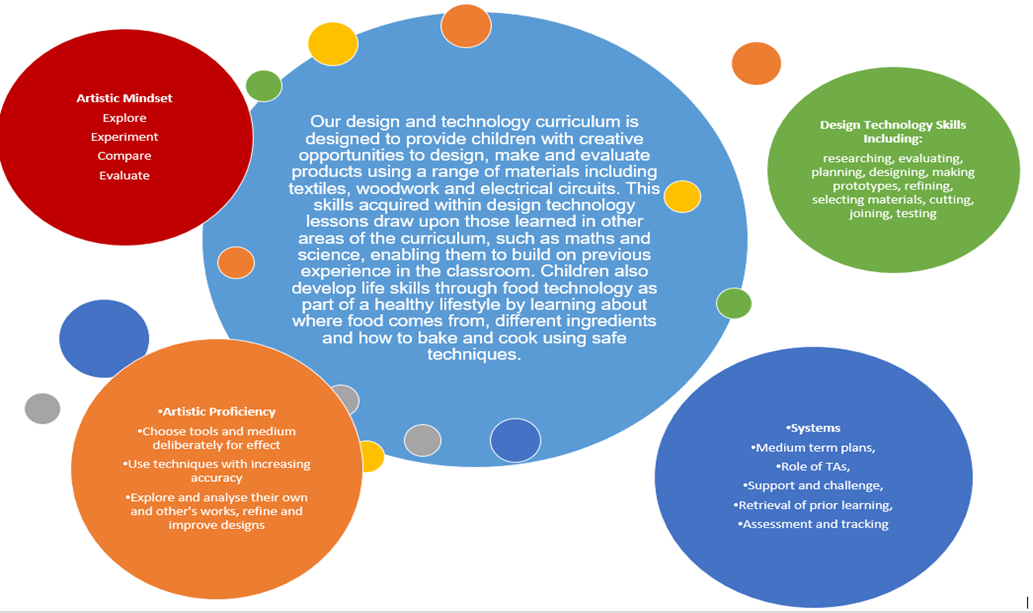
At Churchill CE Primary School we want all children to realise the impact that both good and bad design plays in their day to day life. We aim to inspire a love of learning in this subject area, encouraged by an understanding of the everyday importance DT has within our lives. Through our curriculum provision children learn how to design and make products that solve real and relevant problems within a variety of contexts, including our school community and wider local area. Lessons will build upon children’s curiosity of the world and embrace their inquisitive nature in everyday problems or challenges. We will encourage children to be imaginative and inventive, consider their own and others’ needs, wants and values and have the ability to investigate, evaluate and assess products. The curriculum will draw upon children’s everyday interests and experiences and build on existing knowledge. Children understand that in the design process they will undoubtedly face challenges, but this is an integral part of solutions being developed. As they engage in this learning process, they will be encouraged by our four key attitudes for life: be ready, be resilient, be responsible and be respectful. Children will be confident that it is safe to make mistakes and see these as an important part of learning in DT.
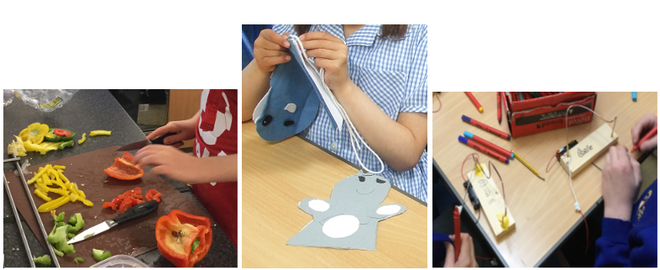
Curriculum Implementation
In order to guarantee that we consistently deliver the essential knowledge, skills and understanding required across Key Stages 1 and 2 we have chosen to adopt the LSP Design and Technology curriculum. This provides us with a clearly laid out framework of relevant learning intentions, activities, skills, knowledge, vocabulary and curriculum links, upon which we can build and add to, with a view to creating a more bespoke working document for our school.
At Churchill, we are lucky enough to be near the great historical city of Bristol and so are able to visit important structures like Isambard Kingdom Brunel’s Clifton Suspension Bridge or view the impressive design and engineering of the Severn Bridges which link England to Wales.
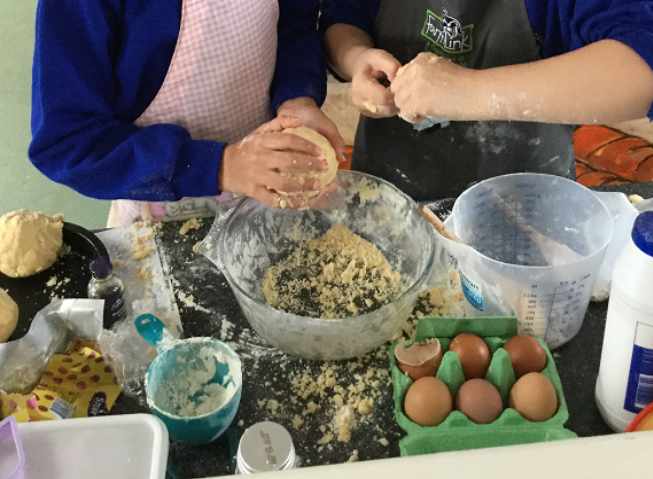
Our rural location also means that we are near a number of working farms. Lower Stock Farm in a nearby village provides a superb facility which enables a class of thirty to use a purpose-built kitchen. This has been an invaluable resource for us when teaching children how to design and produce healthy meals.
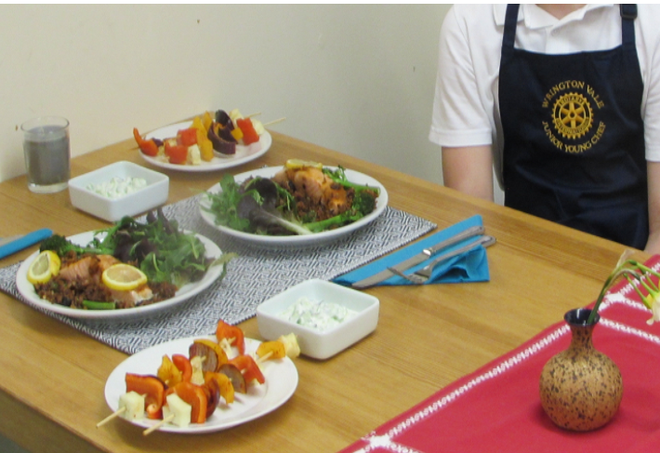
Above: A healthy, nutritionally balanced two course meal designed, produced and beautifully presented for the Rotary Club ‘Young Chef Competition’.
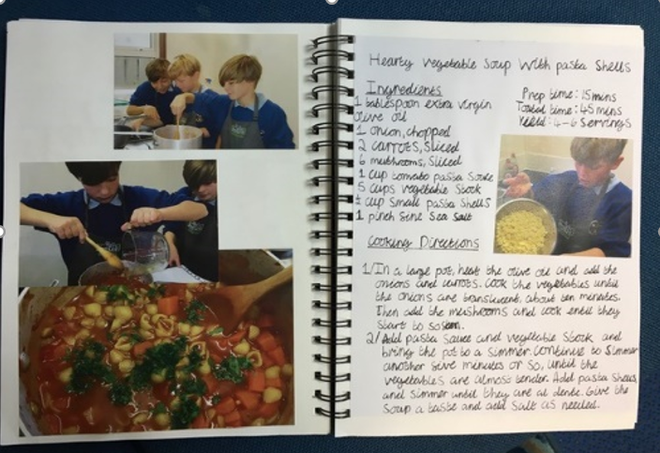
Below: A cook book of recipe, which included the use of seasonal produce, designed and ultimately made at Lower Stock Farm.
Whilst the staff at Churchill have a wealth of ideas and enthusiasm for teaching and delivering high-quality DT lessons, the scheme offers a broad, balanced, structured and useful framework for us to follow. It ensures that we are moving the children’s learning forward by providing a clear progression of the knowledge, skills and understanding required by the National Curriculum.
EYFS
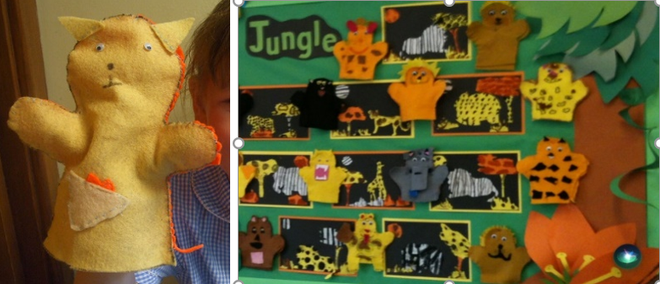
In Year R we aim to inspire a love of Design Technology and lay the foundations to ensure children meet the Early Learning Goals and are ready for Key Stage One. Throughout the year children will work in adult-led groups and independently to:
- Return to and build on their previous learning, refining ideas and developing their ability to represent them.
- Create collaboratively, sharing ideas, resources and skills.
- Compose and decompose shapes so that children recognise a shape can have other shapes within it.
The Early Learning Goals for Expressive Arts and Design indicate what the children should know, understand and be able to do by the end of the reception year. Learning is delivered by providing quality experiences and activities which will enable the children to:
- Safely use and explore a variety of materials, tools and techniques, experimenting with colour, design, texture, form and function.
- Share their creations, explaining the process they have used.
Assessment
Pupils are assessed at the end of each Art and Design unit. Alongside this summative assessment, teachers make judgements as part of their daily lessons and use adaptive teaching to meet the needs of their class.
Impact
At Churchill Primary we want the children to leave with an understanding that design is all around them and has a constant impact on daily life and the wider world. The children at Churchill will have gained the resilience to take risks, ask questions, make mistakes and improve upon them. They will have developed the knowledge and understanding of a variety of products and materials to help them to solve practical problems in the future and will have gained some of the skills which they need to actually make their own designs. They will understand that the design process fulfils a particular need.